


The knees are more susceptible to injury and various diseases than other joints.A significant proportion of orthopedist-traumatologist and rheumatologist patients complain of severe knee pain.From this article you will learn what to do if you suddenly experience severe pain.She is being treated, the main thing is to seek medical help with her problems in time.
What exactly hurts in the knee?
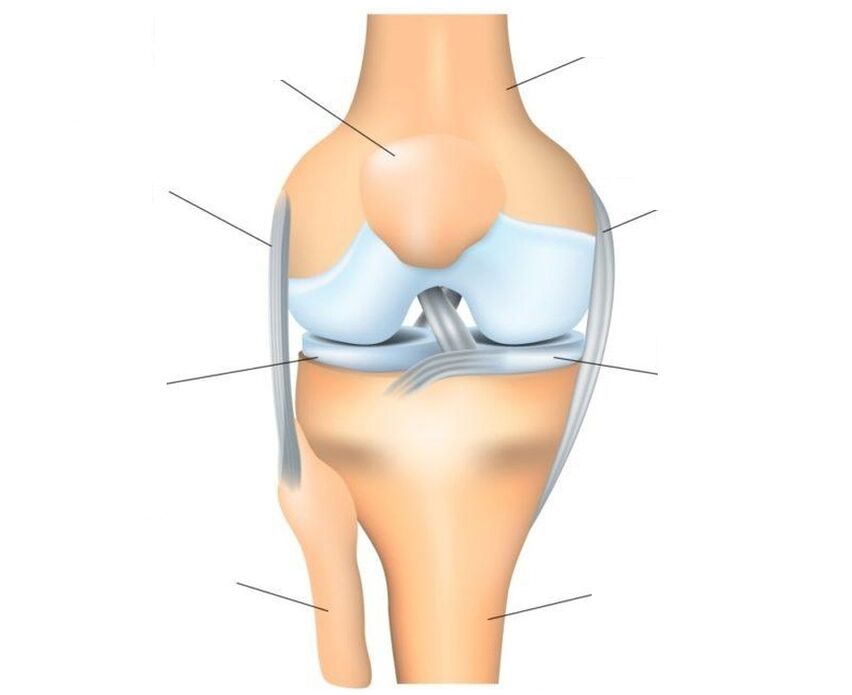
The knee joint is the most complex joint, as it bears the main load.Structure: three bones (femur, tibia and patella form a single trochlear joint, consisting of two interconnected joints: femorotibial (tibiofemoral) and femoral-patellofemoral (patellofemoral).
The patella is a flat sesamoid (additional in the joint) bone that is attached to the head of the femur, sliding in its concave groove and acting as a block.Structural features: the anterior surface of the patella is covered with periosteum, the posterior surface, connecting to the femur, is covered with hyaline cartilage.The patella is strengthened by ligaments: main and lateral – vertical (upper and lower) and horizontal (lateral – internal and external).
O transmits the force of the quadriceps femoris muscle to the musculoskeletal formations of the lower leg, ensuring extension of the lower leg at the knee joint.The surface of the joint-forming bones is covered with cartilage, which acts as a shock absorber.Additional shock absorbers that protect the joint from injury are two crescent-shaped cartilaginous menisci located between the femur and tibia.The joint is held in its correct position by ligaments, tendons and the surrounding capsule.
Injuries and diseases affect various joint tissues.Not all of them can get sick.Thus, cartilage tissue does not have nerve endings and therefore can be destroyed imperceptibly and painlessly.But the ligaments and synovial membrane have many nerve endings and in case of injury or inflammatory processes they immediately begin to react, which manifests itself in the form of severe pain.With significant destruction of articular cartilage, pain may be associated with the involvement of the periosteum, the outer layer of bone that has good innervation, in the process.
What to do if you have severe knee pain
Intense knee pain may appear suddenly or develop gradually.In any case, it often becomes unbearable.If severe pain occurs, you need to calm down and immediately seek medical help.All this can be treated, specialists will be able to help even with advanced disease.If you can’t see a doctor at the moment, you can temporarily relieve the pain on your own.
But you should remember that if you have pain in the knee joint, this is a temporary measure; you still need to seek medical help; you cannot do without it.And it’s better not to delay.
How to treat knee and leg pain at home
To alleviate your condition with severe pain in the knee joint, you can take the following emergency measures:
- Treat pain with tablets.
- Use external painkillers (ointments, gels).
- Injections.If there is no effect from tablets and external agents, the medicine is administered as an intramuscular or subcutaneous injection.
Many drugs can be bought at a pharmacy without a prescription.
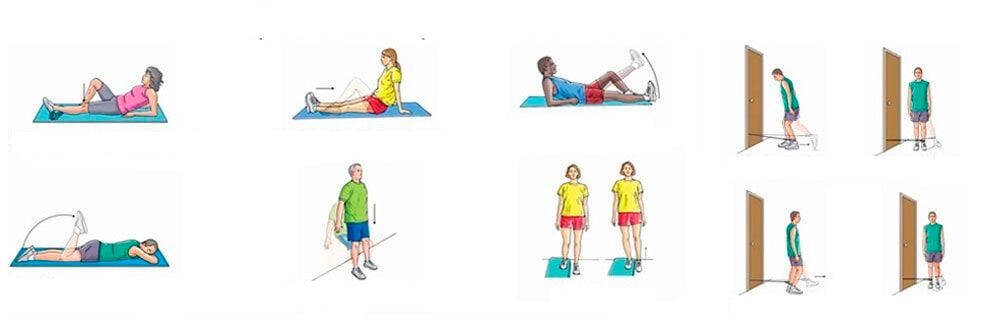
For chronic pain in the knee joints, when there is no significant inflammation, you can perform physical exercises that strengthen the muscular-ligamentous system, improve blood circulation and metabolism.Systematic training leads to a gradual decrease in pain, despite the fact that the legs are pretty crunchy.
An approximate set of exercises for knee pain:
- Fixed knee.Lie on your back, bend one leg at the knee, lift it and hold it in this state for a minute;the second leg is motionless at this time;straighten and lower your leg very slowly, rest for 10 seconds and repeat the exercise with the other leg;repeat 10 times;
- Double leg bending with knees near the face.Lie on your back, bend your legs at the hips and knees, fix the latter near your face and hold it like that for a minute.Then slowly straighten and lower your legs, rest for 10 seconds and repeat;do 5–6 approaches, gradually increasing the load.
Acute pain in the knee requires a state of rest; all physical activity and training are contraindicated.
In case of acute pain in the knee joint, accompanied by swelling and redness of the skin, a violation of the general condition, fever, you cannot move the leg, it must be kept at rest.And only after the inflammation begins to subside, you can move first to passive exercises (performed by an assistant) and then to active exercises (performed by the patient himself).
What not to do if you have pain
For chronic pain, the following should not be allowed:
- bruised knee - you can avoid this by arranging your life in such a way as to reduce the risk of injury to a minimum;
- excess body weight is an additional burden on the knees, especially in the elderly;
- heavy physical activity, jumping, strength sports;You should also not run;
- any intoxication, so you need to get rid of bad habits (smoking, alcohol abuse), treat all chronic diseases and foci of infection;
- wearing uncomfortable tight shoes, high-heeled shoes;
- stress, lack of sleep;
- sedentary lifestyle - you need to force yourself to move at certain intervals.
It is also impossible to apply warm compresses without a doctor’s prescription: in case of purulent and hemorrhagic (with intra-articular bleeding) processes, they can cause irreparable harm.
When you need to see a doctor urgently
If your knee hurts, urgent medical attention is required if the following symptoms appear:
- swelling, redness and tenderness in the knee combined with fever and general malaise;
- severe pain in the knee immediately after the injury or some time after it;
- gradual increase in pain intensity;
- periodically appearing pain after physical exertion, prolonged standing, sharp straightening of the leg;
- night pain and associated insomnia;
- if the pain in the knee is very strong, constant, the feeling that the inside of the patella hurts.
In any case, pain in the knee should be a reason to consult a doctor.There is no point in treating yourself: it may temporarily reduce or even eliminate pain, but it will not stop the progression of the disease and destruction of the joint.Treatment should be entrusted to a specialist.
What to do for severe pain in the knee of various types
Painful sensations in the knee can vary in nature and duration among people.They can be constantly aching or develop only under certain loads, at night, etc.For example, some pathological processes are characterized by pain in the knee when bending, others - pain in the knee when walking, etc.Only a specialist can figure out what exactly hurts and why, and how to help the patient.
Knee pain due to coronavirus and other viral diseases
Viral infections can cause joint inflammation.As a rule, these diseases develop against the background of an existing infection and pass without any consequences after its completion.Thus, with influenza and other acute respiratory viral infections with acute fever, both short-term joint and muscle pain and acute arthritis with inflammation and swelling of the knee joints may appear.Their course is favorable.
Coronavirus infection has its own characteristics: it occurs differently in each patient.Why this happens is unknown.During the disease, aching joint pain, swelling and redness sometimes appear - a sign of acute arthritis, but then they go away.
Arthritis, which begins approximately a month after coronavirus infection, is more dangerous.The fact is that it has a significant effect on the immune system.Malfunctions of the immune system lead to the development of autoimmune processes.This is especially dangerous for people who have close relatives suffering from chronic arthritis.Experts note a high risk of developing rheumatoid arthritis (RA) in such patients.The first sign of RA is stiffness of movement in the morning (difficulty bending the knee).
If arthritis appears after recovery from a viral infection, you should immediately contact a rheumatologist.
Severe pain under the knee
This may be a sign of the development of a Baker's cyst - a distended synovial bursa with fluid located in the popliteal area.The cyst and associated pain under the knee appear due to the fact that it is connected to the cavity of the knee joint and is filled with synovial fluid.In this case, the reverse flow of liquid is difficult for various reasons.Most often, the cyst develops against the background of bruises, arthrosis and arthritis of the knee.
A small cyst can go unnoticed for years.But with its significant size, the surrounding tissues begin to be compressed, causing pain under the knee, which intensifies with physical activity, including walking and running.Women get sick more often.Sometimes the cyst disappears on its own, but often it progresses and increases in volume, which can lead to rupture or suppuration.
If you have pain under your knee, it is better to consult a doctor as soon as possible.Conservative (removal of fluid from the cyst, injection of glucocorticoids into it) and surgical (removal of the cyst) treatment is carried out.
Severe pain in the left or right knee
Severe pain in combination with swelling and redness of the skin over the right or left knee usually indicates the development of an acute inflammatory process.This can be acute nonspecific arthritis (the process can turn purulent), reactive arthritis, which begins a few days after a urogenital or intestinal infection.Both diseases occur with similar symptoms; a correct diagnosis can only be established after a full examination.
The right or left knee can suffer from microtraumas, for example, in athletes or workers in certain professions who use one (usually the right) knee more.
It is important at an early stage not to use folk remedies, but to carry out the correct treatment, this will allow you to fully recover and forget about the pain forever.But even with advanced diseases, a specialist will always be able to provide assistance and relieve pain.
Knee and leg pain
Depending on the cause of the disease, its course and the presence of complications, severe knee pain may include:
- in the shin below the knee– are rare, this may indicate compression of the nerve branches innervating the muscles of the lower leg by the inflamed, swollen periarticular tissues in the knee area;pain under the knee in the back indicates compression of the branches of the sciatic nerve, and pain under the knee in the front indicates that the nerves innervating the anterior surface of the leg are affected;Such diseases are treated by a rheumatologist, but consultation with a neurologist is required;
- above the knee, into the thigh– is often a sign of post-traumatic inflammatory process in the femoral-patellar joint;in this case, patellofemoral pain syndrome develops;the pain is strong, aching, sometimes twitching, aggravated by walking;an orthopedist-traumatologist and a rheumatologist will help you cope with pain;
- from the side, from the inside– pain can develop with injury and damage to the internal lateral articular ligament;pain on the side is strong, jerking, with hemarthrosis (intra-articular hemorrhage) - bursting, accompanied by imbalance of the joint, the whole leg crunches when moving;the same pain appears when the external collateral ligament is sprained;assistance will be provided by an orthopedist-traumatologist.
To eliminate pain, you need to accurately determine its cause, and this is impossible to do on your own.Need doctor's help.
Patella pain on the back, front and sides
Pain in the patella is almost always the result of acute or chronic injuries:
- back knee pain- the causes are associated with damage to the femoral-patellar joint with the development of patellofemoral pain syndrome;the pain is aching, constant, aggravated by walking;
- front– such painful sensations are caused by superficial bruises of the knee or frequent prolonged stay on the knees with microtrauma to the kneecap;the pain is significant, as the periosteum, rich in nerve endings, is injured;
- side knee painin case of rupture or injury of the horizontal internal or external patellar ligaments;injury can develop with frequent long-term microtrauma of the ligaments, for example, during jumping;accompanied by bleeding into the joint cavity (hemarthrosis);pain is strong, constant, accompanied by swelling;movements in the leg are impaired.
To prevent permanent dysfunction of the joint from developing at the site of injury, you should immediately seek help from an orthopedic traumatologist.
Knee pain radiating to the leg, heel, groin
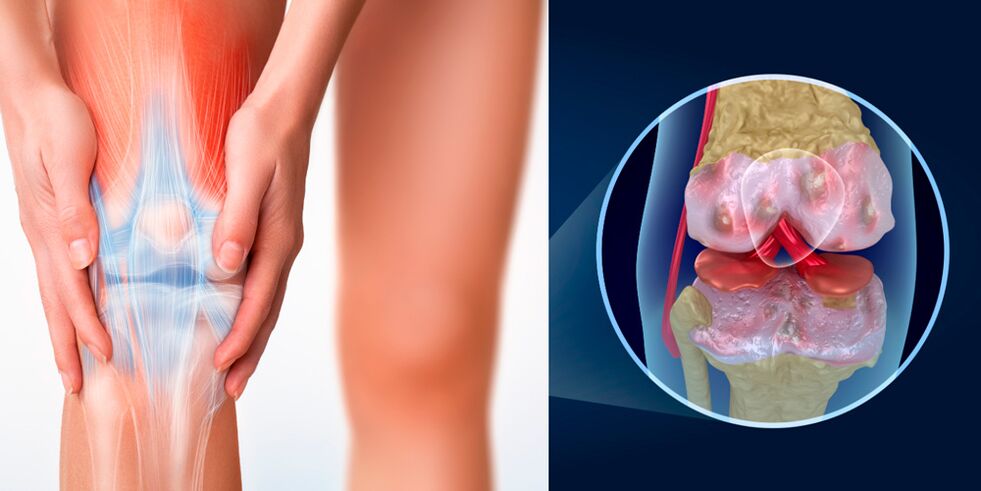
The causes of radiating acute pain in the knee need to be understood.The reason may be:
- femoral nerve entrapment;the pain is acute, piercing in nature, begins sharply in the groin area, spreads along the anterior-inner surface of the thigh and knee, along nerve branches it can reach the inner edge of the foot and heel;sometimes the patient gets the impression that the knee hurts, but this is not the case;
- arthritis (gonarthritis) of various origins: swelling of the joint leads to pinched nerves and the spread of sharp pain in the knees up to the groin and down to the heel;in this case, a mainly aching pain is felt in the knee, which with sudden movements turns into acute pain with irradiation above and below the knee;
- bruise accompanied by hemarthrosis, ligament rupture, severe swelling and compression of nerves;
- bruise with a fracture or dislocation of the patella and imbalance of the joint;acute pain in the knee extends down the thigh to the groin, along the inner surface of the shin - lower, to the heel.
Severe knee pain of this nature requires immediate medical attention.No folk remedies will help, you need to call an ambulance.
Knee pain during extension and flexion
Most often, pain in the knee during flexion and extension, as well as when squatting, is a sign of tendonitis - an inflammatory process in the area of the tendon-ligamentous apparatus of the knee joint.It develops mainly in young men involved in sports and is a consequence of frequent repeated microtraumas associated with jumping and constant shaking of the limb.The first sign is the inability to straighten the knee painlessly.
The cause of painful flexion and extension of the knee can also be arthrosis - degenerative-dystrophic changes in the joint with the growth of connective and bone tissue that interferes with movement.
Only treatment of tendinitis or arthrosis helps relieve the patient from severe pain in the knee when flexing and extending.
Severe knee pain at night
Night pain is characteristic of inflammatory processes.This may be latent arthritis, periodically inflamed knee joint due to arthrosis (arthrosis-arthritis).During sleep, joint and periarticular tissues warm up, blood vessels dilate, which increases swelling.
The periarticular tissues swell, compress the nerve endings, and pain develops.If at the same time there is pain behind the knee, then this may be a sign of a Baker's cyst.How to get rid of swelling and night pain?Treatment of the underlying disease helps.
Knee pain when walking
Pain when moving, jogging, nagging pain under the knee are characteristic of degenerative-dystrophic processes in the knee - arthrosis, since during movement the articular surfaces are injured, completely or partially devoid of shock absorber cartilage.The periosteum, which has good innervation, suffers.Knee pain when descending stairs is also very common.After exercise, patients note that the pain in the knee continues to ache for some time.Over time, pain appears in the foot.
Long-term rehabilitation treatment with the use of chondroprotectors - medications that restore cartilage tissue - will help.In case of complete destruction of the joint - endoprosthetics.
Pain after exercise - squats, running, weight lifting
This indicates long-term microtrauma of the knee joints and the gradual formation of degenerative-dystrophic processes in them.Sometimes pain appears in one right or left knee.Joints crunch.
If there is severe pain in the knee after training, then the athlete needs rehabilitation treatment.Otherwise, there will be a gradual decrease in joint function, accompanied first by periodic and then constant pain.
Knee pain and crunching
Sharp, sudden pain in the knee and crunching (crackling) indicates a rupture of the meniscus - the cartilaginous shock-absorbing pads in the knee joint.This may be the result of injury or age-related wear and tear of the cartilage structures.
Severe joint pain may go away, but pain in the knee will remain when squatting, then dysfunction of the limb will gradually increase, accompanied first by pain during exercise, and then by constant pain, which intensifies when going down the stairs.Over time, the entire limb suffers and crunches, including the foot.Long-term rehabilitation treatment under the supervision of an orthopedist-traumatologist helps.
Knee pain and swelling
Pain accompanied by swelling always indicates the presence of an inflammatory process.It can be aseptic (without the presence of infection, usually after injury), infectious, infectious-allergic and autoimmune (with an allergy to one’s own tissues).
To get rid of such pain, you need to identify their cause and carry out treatment prescribed by a specialist.
Injuries and diseases that cause knee pain
The most common pathologies accompanied by knee pain are:
- Closed and open knee injuries with intra-articular fractures, dislocations, meniscus tears.All of them lead to the development of inflammatory processes (arthritis), which then turn into degenerative-dystrophic processes (arthrosis) with the formation of constant pain and dysfunction of the knee.This is the most common cause of knee pain.Athletes are at risk.Even a minor injury to the knee can cause destruction of joint tissue cells, which leads to the development of an inflammatory process.With significant injuries, all these processes are pronounced and are accompanied by prolonged pain.Knee instability, which develops when the ligamentous apparatus is damaged, is of great importance.Over time, instability increases, nearby tissues are injured, which leads to increased pain in the knee joint, especially when descending stairs.In the absence of proper treatment, the process can be complicated by infection, become purulent, threatening the patient’s life, or become chronic with gradual progression and destruction of the joint, accompanied by severe pain.
- Arthritis of the knee joint is an inflammatory process of various origins, accompanied by an increase in body temperature and a disturbance in the general condition of the patient.Patients complain that the pain in the knee aches constantly.The disease can be infectious, infectious-allergic, autoimmune, metabolic in nature.The inflammatory process also occurs differently, depending on the cause that caused it (purulent, rheumatoid, psoriatic, gouty and other arthritis).Sometimes arthritis can be complicated by a Baker's cyst located in the popliteal region.Then there is pain behind the knee.Only adequate treatment prescribed by a traumatologist or rheumatologist will save you from joint destruction and disability.
- Arthrosis of the knee joint is a degenerative-dystrophic process in the joint that develops after injuries, acute and chronic inflammatory processes and against the background of age-related metabolic disorders in older people.There is destruction or thinning of the cartilage shock-absorbing tissue (menisci and the cartilaginous layer covering the articular surfaces of the bones).The destruction of the joint progresses slowly but steadily.I am concerned about pain and crunching when moving.In old age, this is the main cause of knee pain.The bones rub against each other, their structure is destroyed, the joint is deformed, all this is accompanied by severe pain.
- Cysts and tumors.
How to Treat Severe Knee Pain
Injuries and diseases of the knee often lead to the development of patellofemoral pain syndrome (PFPS), pain in the anterior part of the knee joint.Changes in the joint gradually destroy the patellar cartilage, contributing to the development of joint instability and constant severe pain in the knees.Only a course of rehabilitation treatment prescribed by a qualified specialist can help.
Diagnostics
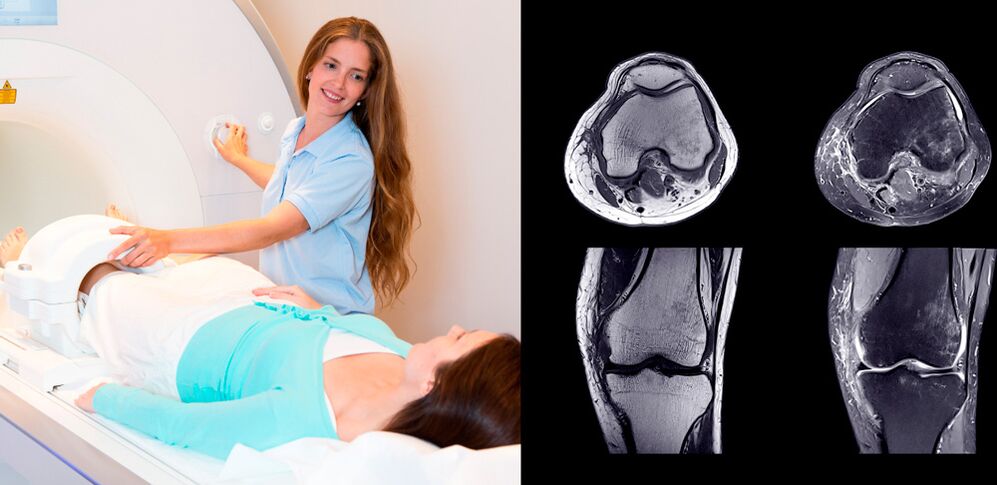
Knee pain has different causes and requires an individual approach to treatment.First of all, it is necessary to make a correct diagnosis, and this will require examination in a clinic.And only after this is treatment prescribed for knee pain.
Some diseases cannot be cured completely, but the doctor can eliminate the pain and stop the destruction of the joint.
To establish the causes of pain and diagnose the disease, the following examination is performed:
- Laboratory tests– clinical, biochemical, immunological blood test, if necessary – sampling and examination of intra-articular fluid (microscopy, culture on nutrient media to determine the sensitivity of the identified infection to antibiotics).
- Instrumental studies: Ultrasound– reveals pathology of soft tissues and the volume of intra-articular fluid radiography– changes in the bone tissue of the knee; CT and MRI– a more detailed study of the pathology of soft and hard tissues; diagnostic arthroscopy– appearance and changes in the synovial membrane of the knee.
Methods for treating severe knee pain
Treatment measures are prescribed individually.Pain associated with a knee injury is treated by an orthopedic traumatologist; if the disease becomes chronic, consultation with a rheumatologist is necessary.If there is a suspicion of a purulent inflammatory process, then a surgeon will be better able to deal with the disease.All chronic inflammatory processes in the joints are treated by a rheumatologist, but specific infectious processes, for example, tuberculosis of the knee, are treated by a phthisiatrician or other specialist in close contact with a rheumatologist.
First of all, they try to eliminate pain as much as possible, using for this purpose both drug therapy (modern medications for knee pain, including ointments), and non-drug remedies for knee pain (manual therapy, massage, therapeutic exercises, reflexology courses and other traditional methods, folk remedies).To reduce the load on the joint and create rest, various immobilization methods are used (splints, splints), as well as taping - fixing the joint using special adhesive tapes.
For all acute joint pain, an emergency examination of the patient is carried out with simultaneous anesthesia.All modern and traditional methods of pain therapy are used in treatment.After this, according to indications, the patient is either hospitalized or prescribed a course of outpatient treatment followed by rehabilitation.No patient with pain is left without the attention of specialists.